January 31, 2012

the first lesson: how to hold the pencil

Either a pencil or a piece of charcoal, offers a range of marks, depending on how you hold it. For the beginner, a 2B drawing pencil is a writing implement---fingertips down near the nib, in a death grip, for maximum control. Unconsciously, the side of the hand is dragged across the paper---counted on to wipe out the drawing. Try either of these more nimble methods:
1) First, open your hand, and lay the pencil across, near your fingertips. Use your thumb to gently hold the pencil in place. The first three fingers, along with the thumb, are active drawing participants. (Make sure to hold the pencil towards the back end, which allows for greater flexibility.) Now you can use both the tip, and the side of the pencil---easily moving back and forth between them. Want to rest your hand? Extend your pinky instead. Let the tip lean on the paper---for support, and to keep your hand elevated.
 2) Interested in drawing only with the pencil point? (Or with a pen.) Return to the writing implement position. This time, hold the pencil further back, away from the nib, and again extend your pinky. 


January 23, 2012

start of the new semester | quote

The following words of wisdom were by the dance choreographer, Martha GrahamThey make for an enlivening and thought provoking mantra:  
“There is a vitality, a life force, an energy, a quickening that is translated through you into action, and because there is only one of you in all of time, this expression is unique. And if you block it, it will never exist through any other medium and it will be lost. The world will not have it. It is not your business to determine how good it is nor how valuable nor how it compares with other expressions. It is your business to keep it yours clearly and directly, to keep the channel open. You do not even have to believe in yourself or your work. You have to keep yourself open and aware to the urges that motivate you. Keep the channel open. ... No artist is pleased. [There is] no satisfaction whatever at any time. There is only a queer divine dissatisfaction, a blessed unrest that keeps us marching and makes us more alive than the others” 

January 14, 2012

planning the drawing syllabus | portraiture

Which lesson should I scrap? Do I teach more perspective and less figure drawing? What assignment goes? Homework that inspires creative thinking or observational drawing? After their final evaluations, I ask the students. Their candidness proves helpful, as I update my syllabus. 

Drawing a face usually elicits fear. Yet, they suggest adding another class on portraiture. Am I surprised? If they want to draw their mother, father, or boyfriend--and have it look like them--more practice is needed. With only six figure-drawing sessions (one on portraiture,) I rethink the lesson on clothing. Leafing through copies of old master drawings, I gather up a handful. In each, the style of dress provides a clue--the time frame, the wealth, and the possible occupation, of the sitter. So why do I have to remind students to include a collared shirt, or the ripples on a teeshirt? Simply put, clothing is secondary to achieving a likeness, even when the outfit informs their judgement. Professionalism, stiffness, approachability are all communicated through the clothes. In the formal apparel of his subjects, the artist, Jean August Dominique Ingres, embodied the romantic spirit of his time. Will our decade be recognizable by the brands--American Eagle, Armani, Gucci, and Prada (to name a few,)--graphically emblazoned across our chests, jeans, and accessories? Clothing's impact on portraiture needs to be more fully addressed, in a second class. 

Invariably, my newest drawing students learn from the students, who come before them. I scan through photos of their various portraits. Some I print, and will hang up alongside those of Rembrandt, Ingres, Menzel, and Kollwitz. All those represented are  timeless--in their skillfulness. Yet, there is one major difference. When they are drawn by students, in the classroom, for the newest students admiring them, it means that the skill is achievable. 

The following is a sampling, from past drawing, life drawing, and drawing & painting classes--some of which I will show this semester:


January 09, 2012

museum show

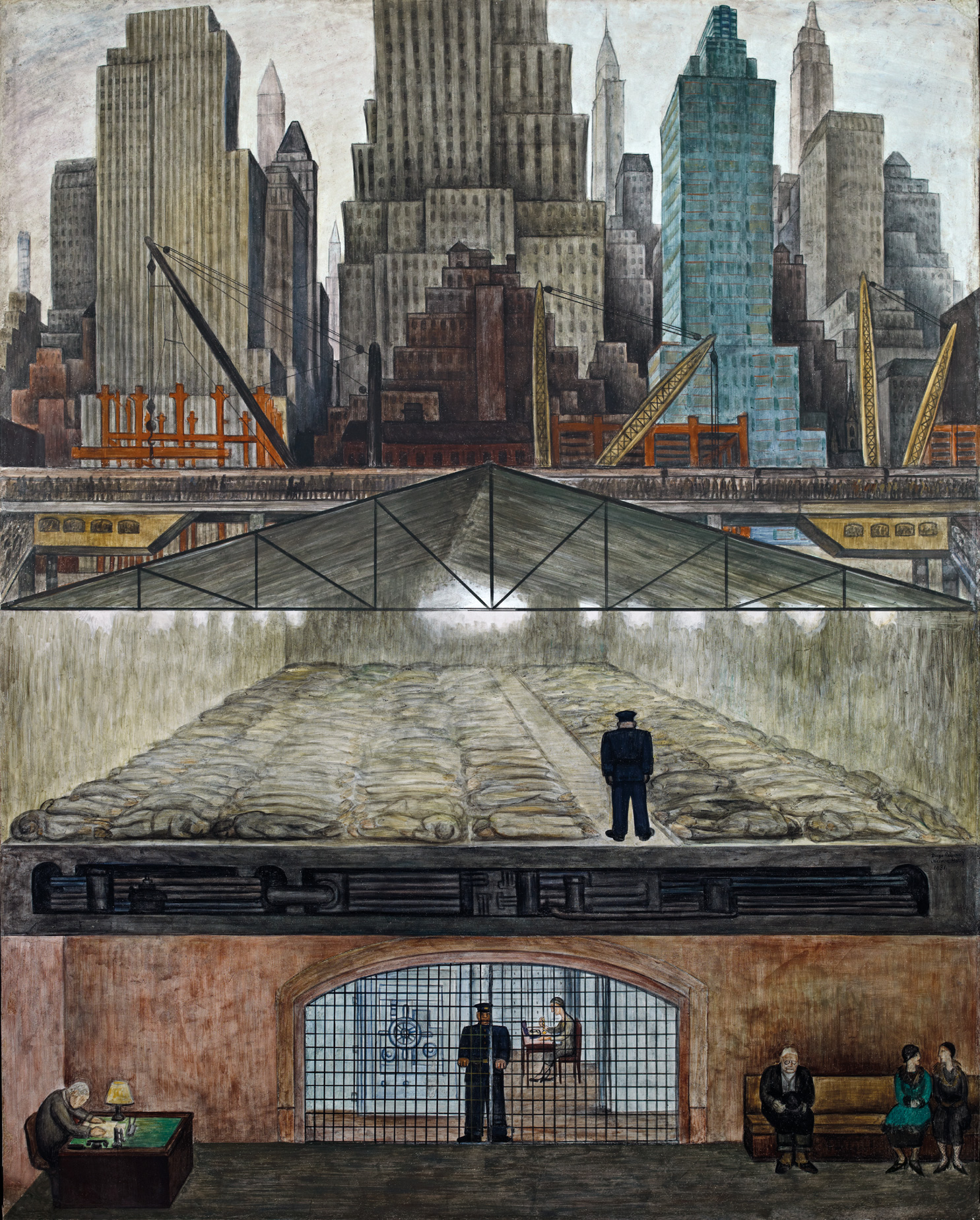
At the MOMA, there is an exhibit of murals, by Diego Rivera, commissioned by the museum for a show, in December 1931. Three more frescos were added, in January 1932, which "depict labor and construction in depression-era New York." The following is my favorite, both for its simple--yet powerful--perspective, and for its contemporary relevance: 
"In Frozen Assets, Rivera coupled his appreciation for New York’s distinctive vertical architecture with a potent critique of the city's economic inequities. The panel’s upper register features a dramatic sequence of largely recognizable skyscrapers, most completed within a few years of Rivera’s arrival in New York. In the middle section, a steel-and-glass shed serves as a shelter for rows of sleeping men, pointing to the dispossessed labor that made such extraordinary growth possible during a period of economic turmoil. Below, a bank’s waiting room accommodates a guard, a clerk, and a trio of figures eager to inspect their mounting assets in the vault beyond. Rivera’s jarring vision of the city—in which the masses trudge to work, the homeless are warehoused, and the wealthy squirrel away their money—struck a chord in 1932, in the midst of the Great Depression."


The Museum of Modern Art
November 13, 2011–May 14, 2012

January 08, 2012

urban sketchers: happy new year!

On Urban Sketchers--one of my favorite websites--I came upon these sketches, which employed calligraphic pens, for their versatility. What a wonderful effect!

Urban Sketchers: Happy New Year!: Kicking off 2012 with some sketches from the holidays-I was in Portland, Oregon for a few days then back to San Francisco to draw around Chi...

January 05, 2012

drawing & painting I '11 | travel


With the start of a new year, a new blog, and cold weather, I think of travel--not my own. My son is trekking through Sri Lanka. Momentarily rooted across the globe, I skate past manic stages of worry, to marvel at his exotic adventure: Warm, tropical breezes, set in a country scarred by the tsunami, and a 30 year war. (Ask me if I am breathing.) So, I refocus, scan through students' work, and pause to read Zimbiri's statement. I learn to relax. Her own wisdom clearly comes with travel.


Site Meter